Average Reviews:

(More customer reviews)The book makes an interesting case using good evidence for most of it's text.
Susanne Friedberg argues that in spite of egalitarian origins to transform the world, the organic/natural foods revolution begun in the 1960's has done little to eradicate the conditions in other countries--where tainted food is a defacto way of life for people. The most careful washing cannot fully eliminate everything every time.
However, ongoing disparities in America where people on public assistance cannot presently afford to eat healthy--regardless of how much they want to also needed to be addressed in Warren Belasco's essay on how the hippies introduced organic food. Low-income people do not necessarily have to contend with the same degree of food impurity as overseas, but are also subject to economic disparities in their access to healthy food. They ironically remain stuck with the brands the hippies and their present day counterparts shun because it IS the cheapest to purchase with the resources they do have and the organic companies have not found a way to make the American dollar stretch further. Why should only certain groups of people be able to eat safe and healthy food?
The editor and her contributors are empathetic to the subject matter--which I have not previously seen in other anthologies. Yet, they mostly present it with a critical perspective, demanding that the reader examine previous assumptions about the relationship between food and politics--and our own personal relationship.
Click Here to see more reviews about: The Cultural Politics of Food and Eating: A Reader (Blackwell Readers in Anthropology)
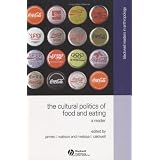
The Cultural Politics of Food and Eating offers an ethnographically informed perspective on the ways in which people use food to make sense of life in an increasingly interconnected world.
Uses food as a central idiom for teaching about culture and addresses broad themes such as globalization, capitalism, market economies, and consumption practices
Spanning 5 continents, features studies from 11 countries—Japan, China, Russia, Ukraine, Germany, France, Burkina Faso, Chile, Trinidad, Mexico, and the United States
Offers discussion of such hot topics as sushi, fast food, gourmet foods, and food scares and contamination


0 comments:
Post a Comment